
6 min read
Why agencies lose time on small updates
A "small" update can take half a day: finding the access, understanding the client setup, testing, reassuring, then publishing. Time mostly goes into the grey areas.
When every store has its habits and exceptions, the agency restarts almost everything on each intervention. The loss is not in the technical gesture, but in the coordination.
This guide identifies where time is really lost and how a shared validation framework recovers it, without weighing down the client relationship.
Recover the time lost on client updates
Standardise preparation and validation: one request, one preview, one traced decision.
Start a free trialSee pricingHow it works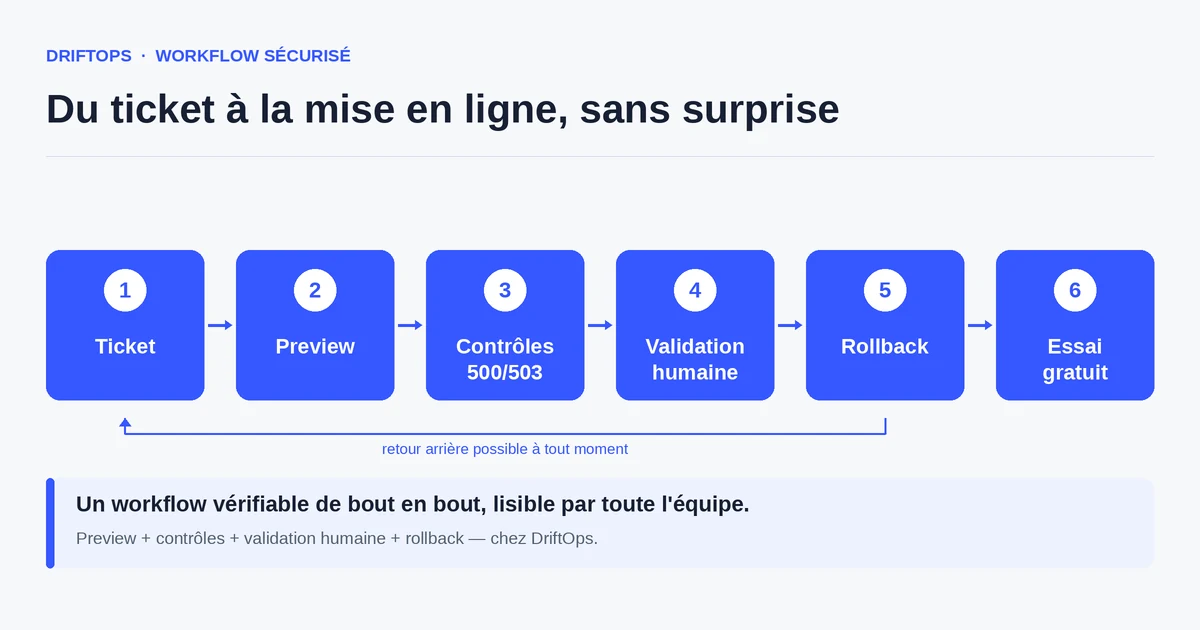
Where time is really lost in an agency
The time billed on an update does not reflect the real effort. Before even touching the code, you must find the access, recall the client specifics, check which modules are in place and which procedure to follow.
This re-contextualisation phase repeats on each intervention, especially when several people work on the same store portfolio. The knowledge stays in someone's head, not in a shared framework.
On top of that come the validation round-trips: screenshots emailed back and forth, vague descriptions, waiting for confirmation. That is where the hours quietly add up.
The risks of a case-by-case organisation
Without a common method, every client becomes a special case. A fix prepared for one store can be applied to another by mistake, or an unvalidated version can go out because the states get mixed up.
Tracking validations becomes hard: two weeks after an intervention, nobody knows precisely who approved what, or on which version. Discussions become subjective.
Finally, dependence on one person weakens the whole agency: if they are away, their stores become risky to touch for lack of a documented procedure.
The method: a common, reproducible framework
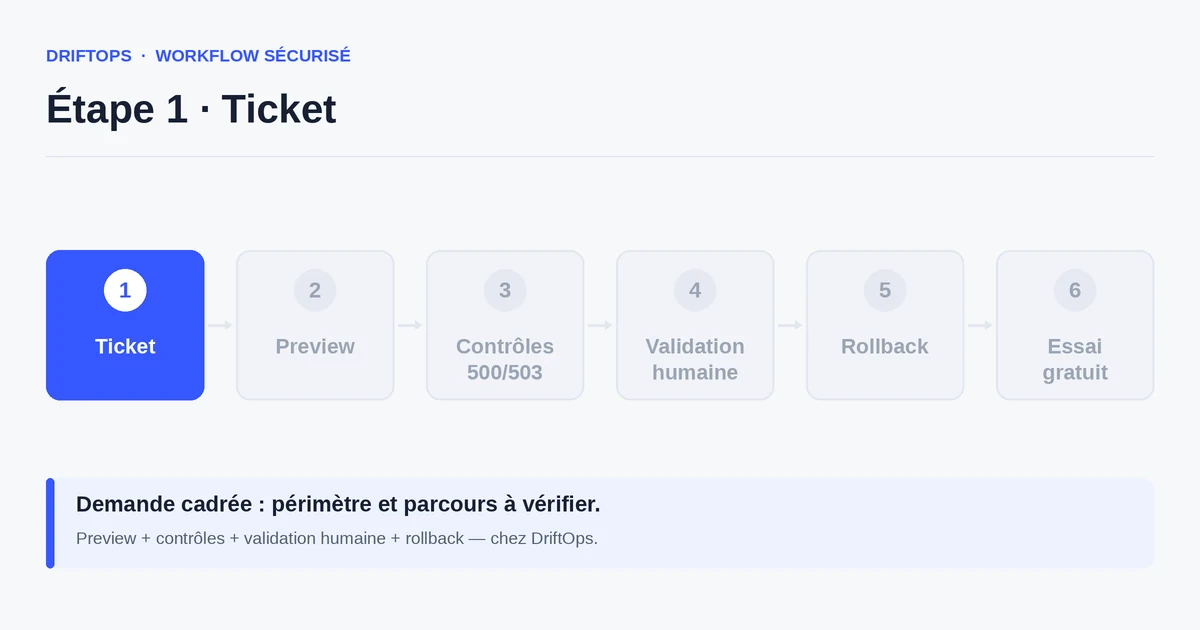
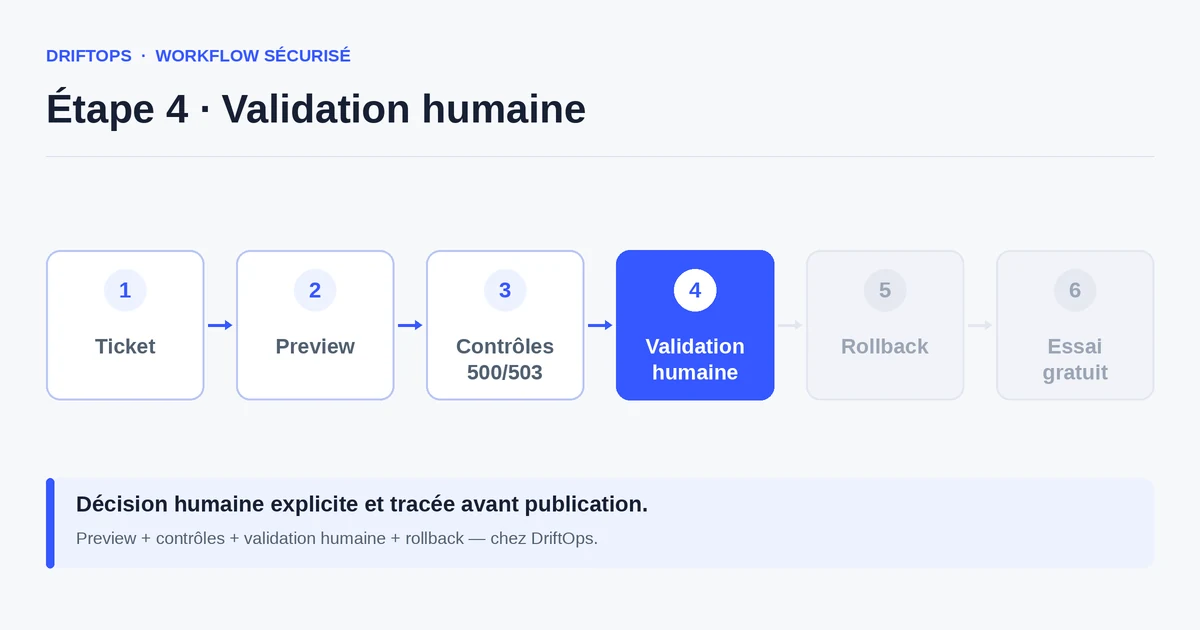
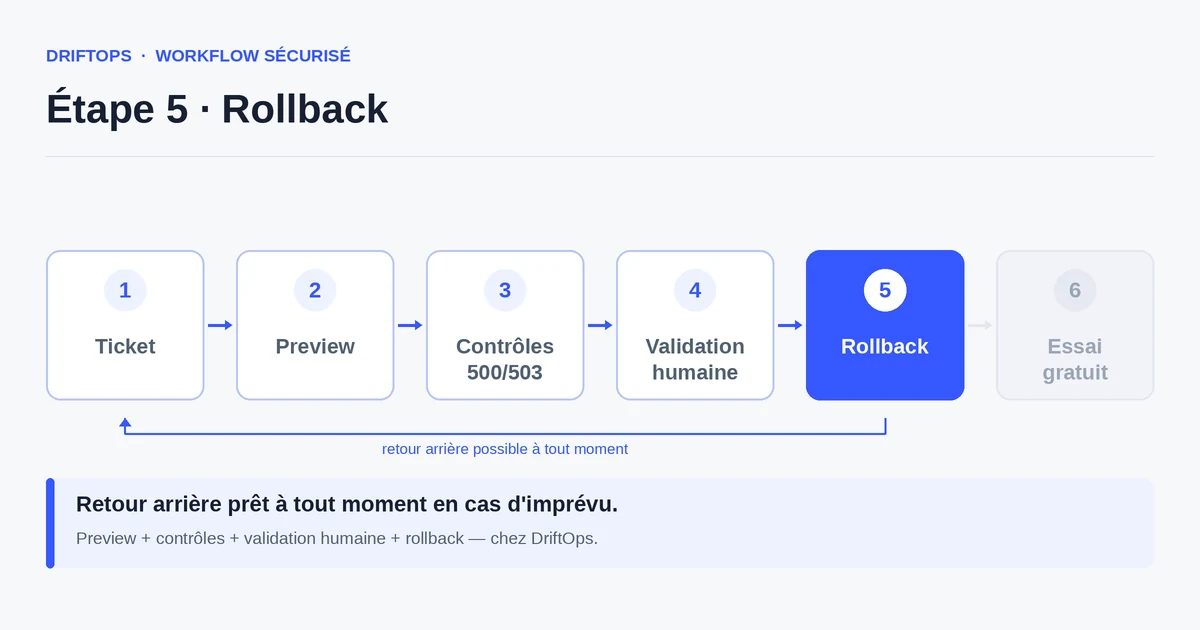
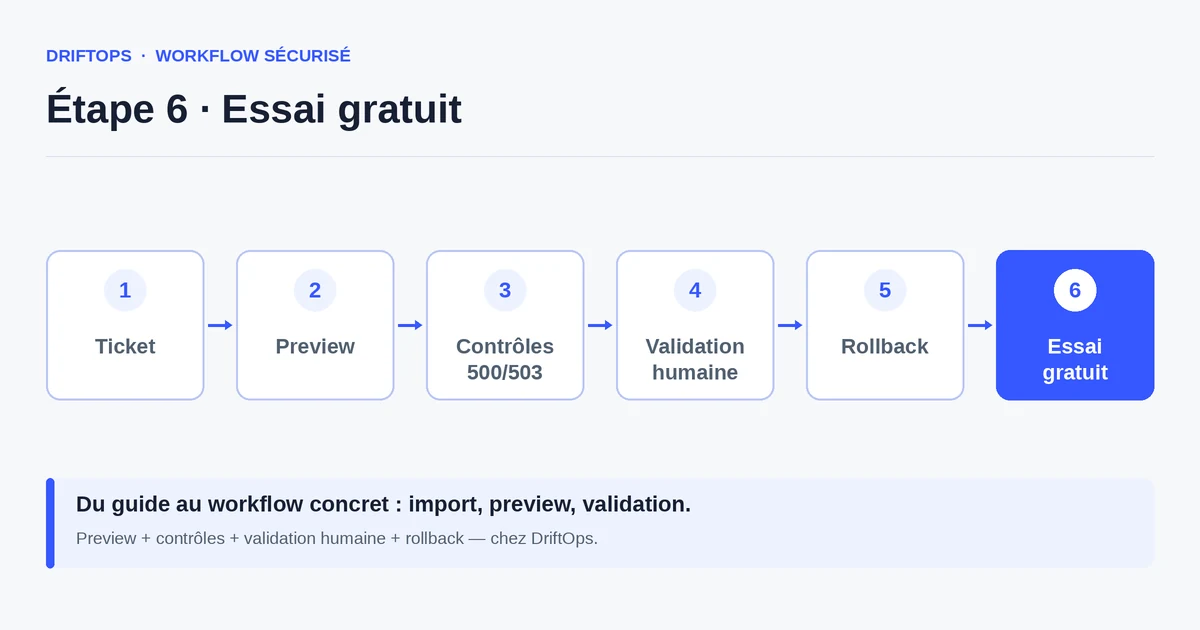
Standardise the path: every change starts with a framed request (a ticket), goes through a testable version, and ends with an explicit decision. The same path applies to all stores.
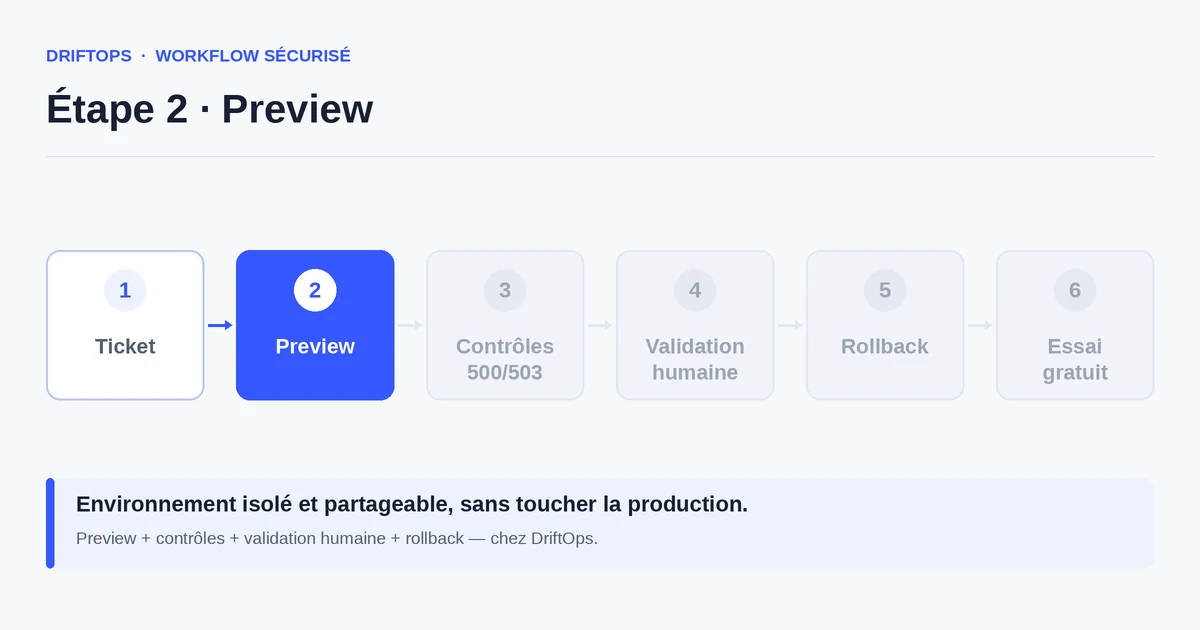
Make validation visible to the client: a preview link replaces screenshots and descriptions. The client sees what they validate, which shortens the exchanges.
DriftOps cleanly separates projects, tickets and validations. The agency immediately finds the state of each store and no longer has to rebuild the context on every intervention.
Scattered procedures vs a single path
Scattered procedures — internal notes, each person's memory, different methods per client — give an impression of flexibility but cost dearly in re-contextualisation and mistakes.
A single path requires an initial standardisation effort, quickly repaid: preparation gets shorter, new members are trained faster and validations become traceable.
PrestaShop, WooCommerce and Magento compared
| Platform | Frequent risk | Recommended check |
|---|---|---|
| PrestaShop | Modules, overrides, hooks, translations and Smarty cache. | Test product pages, cart, checkout, back office and cache clearing. |
| WooCommerce | Plugins, WordPress options, webhooks, emails and scheduled actions. | Check cart, sandbox payment, coupons, stock and order emails. |
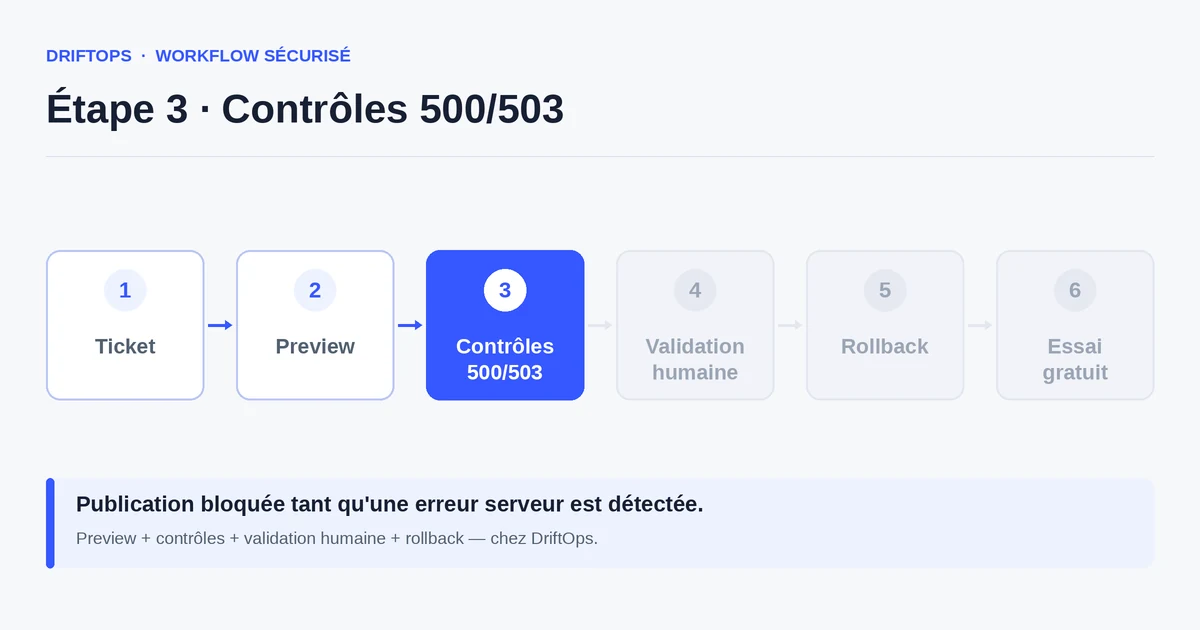
| Magento | Indexes, full-page cache, compilation, store views and modules. | Check catalogue, checkout, indexing, cache warm-up and rollback artefact. |
Why agencies lose time on small updates becomes more reliable when these differences are treated as explicit checks rather than server details.
Use case: five stores before Black Friday
An agency manages five PrestaShop and WooCommerce stores. Two clients are preparing their Black Friday the same week, with different fixes.
Thanks to separate validations and a preview per store, the changes do not mix: each client validates their own link, and the agency knows exactly which version is ready for which store.
The time usually lost untangling contexts is reinvested in the quality of the tests, when the stores need it most.
Checklist to reduce time losses
A few simple rules recover most of the lost time.
- One framed request (ticket) per change, with the scope to test.
- Client access and specifics centralised, not in a single head.
- A testable version shared by a link rather than screenshots.
- An explicit, traced validation per store.
- No fuzzy batch: one change, one decision.
- An identical procedure from one client to the next.
Measuring the time recovered
Compare the average time spent on an update before and after standardisation. The share of re-contextualisation and validation round-trips should drop noticeably.
Also track the number of client returns after publishing: a clear framework reduces misunderstandings and therefore unbilled rework.
Conclusion: the framework saves time
Time lost in an agency rarely comes from technical difficulty. It comes from the fuzz: scattered access, variable procedures, informal validations.
By adopting a common path and a visible validation, the agency delivers faster and more calmly. DriftOps provides this framework without weighing down the client experience.
Standardise your multi-client deliveries
Give each store its preview and its validation to stop reinventing the procedure every time.
Start a free trialSee pricingHow it worksFrequently asked questions
Why does a small update take so long in an agency?
Because most of the time goes into re-contextualisation, finding access and validation round-trips, not the technical gesture itself.
What is re-contextualisation and why does it cost so much?
It is the phase of finding access, recalling client specifics and checking which modules and procedure apply; it repeats on every intervention, especially across a portfolio.
Why do validation round-trips waste hours?
Screenshots emailed back and forth, vague descriptions and waiting for confirmation add up; a preview link the client can open replaces them and shortens exchanges.
What is the risk of a case-by-case organisation?
Every client becomes a special case, a fix can be applied to the wrong store, and an unvalidated version can go out because the states get mixed up.
Why is dependence on one person dangerous?
If the person who knows a store is away, that store becomes risky to touch for lack of a documented, shared procedure.
How do I standardise without rigidifying?
Keep one common path (request, preview, validation) for every store while letting each one keep its documented specifics.
How does DriftOps help across several clients?
It separates projects, tickets and validations, so the agency immediately finds the state of each store and who validated what without rebuilding the context.
How do I measure the time recovered?
Compare the average time spent on an update before and after standardisation and track the number of client returns after publishing.
Frame your updates without burdening the client
DriftOps separates projects, tickets and validations so the agency quickly finds who validated what.
Start a free trialSee pricingHow it works