
6 min read
Why your real store should not serve as a test
The live store is sometimes used to check a change, "quickly, between two orders". It is tempting, but every trial then becomes public.
Staging and production have two opposite roles: one is for trying, the other for selling. Confusing them means exposing sales to every test.
This guide clarifies the difference between the two and shows how to keep production stable while testing freely elsewhere.
Clearly separate test and sale
Use a copy for trials and keep production for orders: DriftOps prepares the preview.
Start a free trialSee pricingHow it works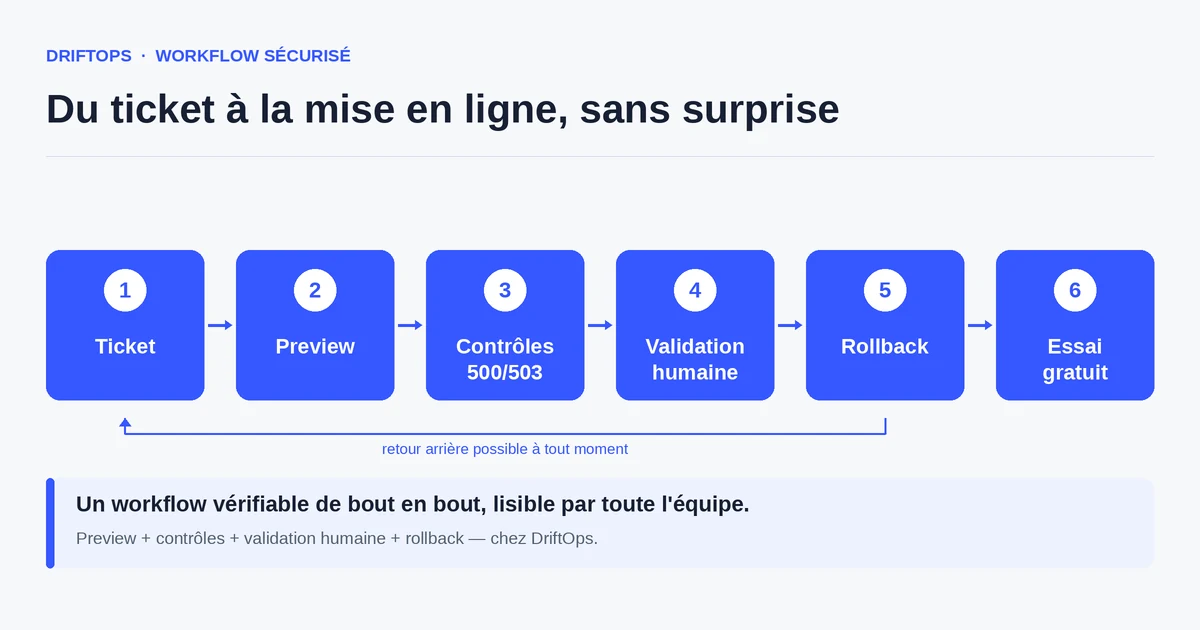
Two environments, two roles
Production is the environment where customers buy. Its only mission is to stay stable and available. Staging is a trial space: you are allowed to break things there without consequences for sales.
Confusing the two is like using your cash register as a draft. As long as no test goes wrong, the habit seems harmless; at the first incident, it becomes very costly.
Separating the roles does not complicate the work: it clarifies when you are allowed to experiment and when you must protect what exists.
The risks of testing in production
A failed test in production is immediately public: a broken theme, a wrong pricing rule or an unstable module are seen by visitors before the team.
The checkout flow is the most exposed. Checking a payment module directly in production can block purchases for the whole duration of the test, exactly when you thought you were saving time.
Beyond the technical incident, it is trust that suffers: a customer who hits a bug doubts the reliability of the store, even if the fix comes fast.
The method: try on the copy, sell on production
Reserve staging for trials and production for sales. Every change is first tested on the copy, validated, then only carried over to production.
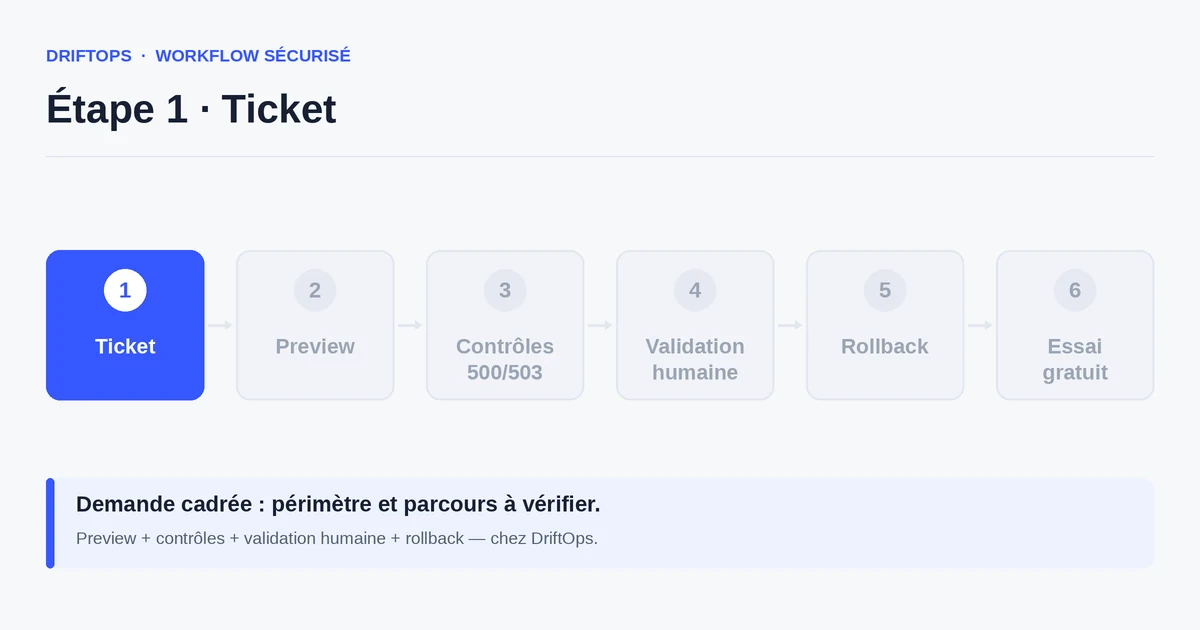
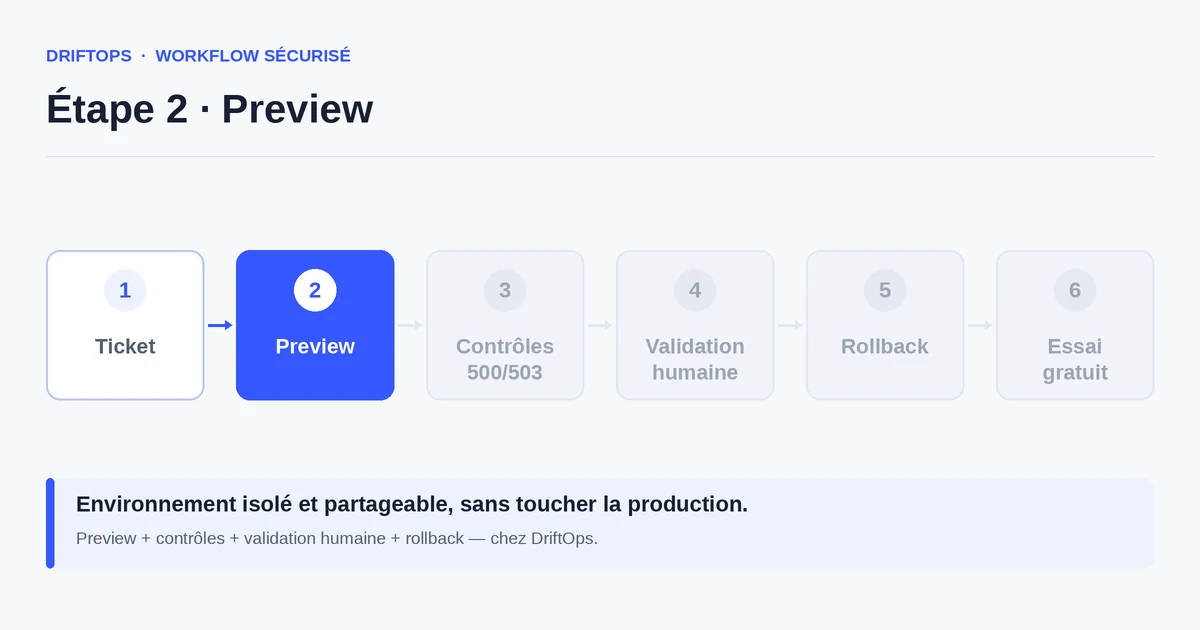
Staging must be faithful (same modules, representative catalogue) and isolated from the public. The merchant validates via a link, without handling the server or risking exposing a test.
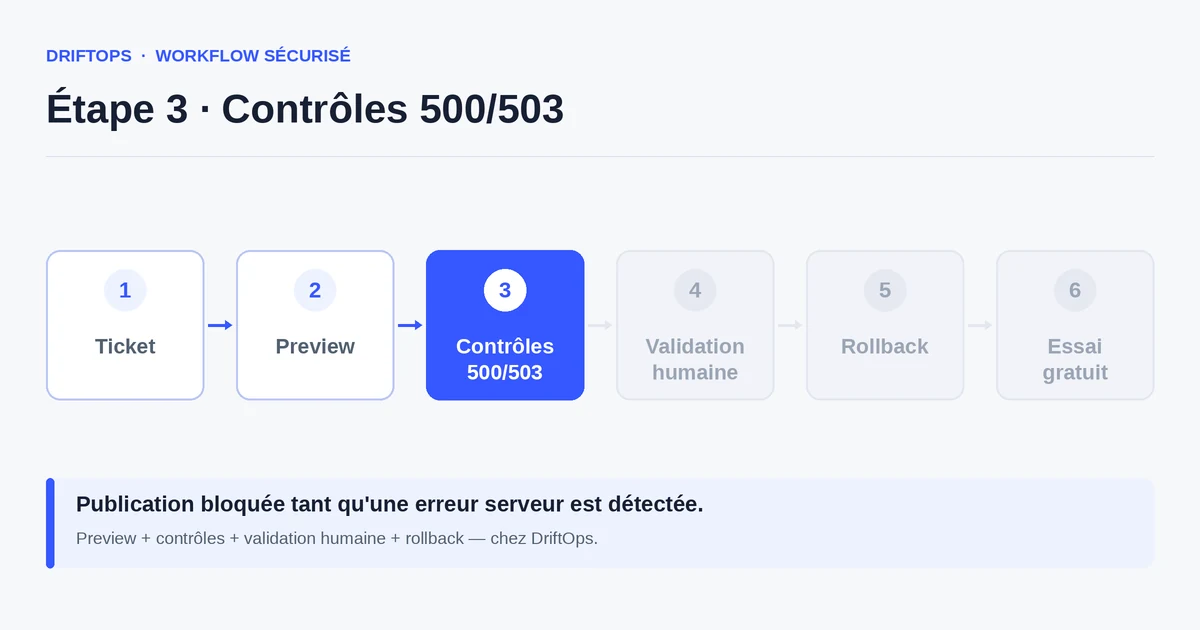
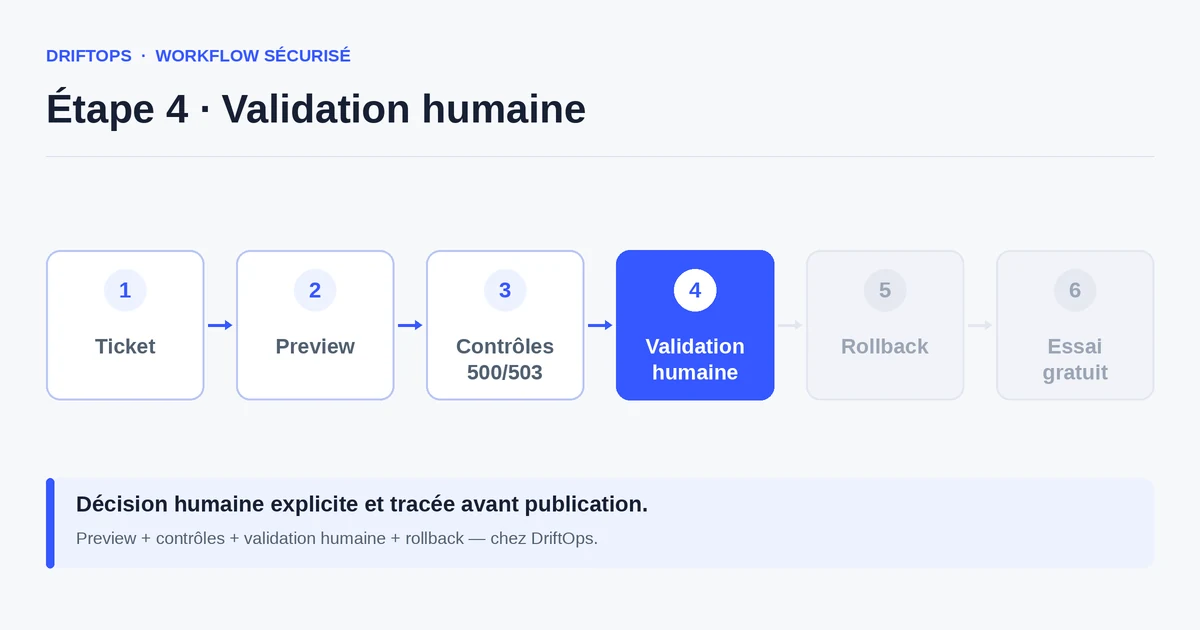
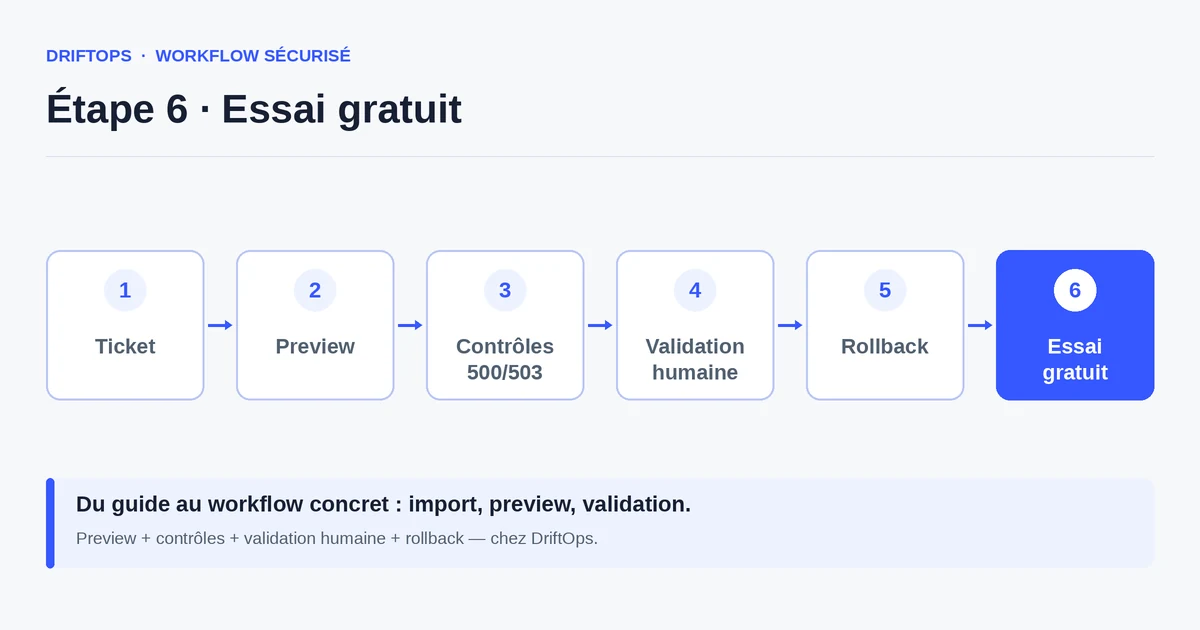
DriftOps embodies this separation: a testable version per change, and a release that waits for explicit approval. The live store only moves to receive validated work.
Testing in production vs a validated staging
Testing in production avoids preparing a copy, but transfers all the risk to customers. Every trial is a bet on the store's stability during the check.
A validated staging requires an up-to-date copy, quickly repaid: you try without stress, you show the result, and production only receives what works.
PrestaShop, WooCommerce and Magento compared
| Platform | Frequent risk | Recommended check |
|---|---|---|
| PrestaShop | Modules, overrides, hooks, translations and Smarty cache. | Test product pages, cart, checkout, back office and cache clearing. |
| WooCommerce | Plugins, WordPress options, webhooks, emails and scheduled actions. | Check cart, sandbox payment, coupons, stock and order emails. |
| Magento | Indexes, full-page cache, compilation, store views and modules. | Check catalogue, checkout, indexing, cache warm-up and rollback artefact. |
Why your real store should not serve as a test becomes more reliable when these differences are treated as explicit checks rather than server details.
Use case: testing a new module
A team wants to install a new module on their PrestaShop store. On staging, they check the display, the cart, the test payment and the back office.
During all that time, the live store does not change: customers keep buying normally, without suffering the trial and error of the installation.
Once the module is validated on the copy, it is published to production with the certainty that it does not harm the purchase path.
Checklist to separate test and sale
A few rules keep the boundary between the two environments.
- Faithful staging: same modules, representative catalogue.
- Staging isolated from the public and not indexed.
- No direct test on the live store.
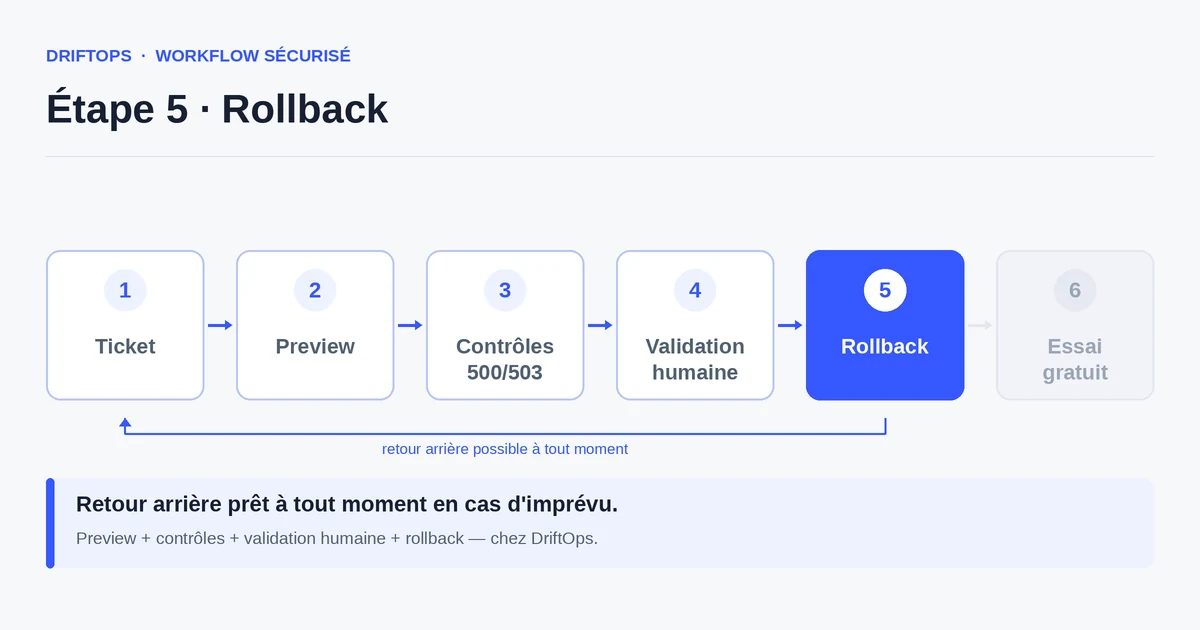
- Validation of the change on the copy before publishing.
- Preview link shared for the decision.
- Only the validated version is carried over to production.
Measuring the benefit of the separation
Track the number of incidents visible to customers: it should tend towards zero once tests leave production.
Also observe the team's calm: being able to try without risk reduces pressure and improves the quality of the checks.
Conclusion: production is protected, the copy is for experiments
The rule is simple: you do not experiment where you sell. Staging absorbs the trials, production stays stable for customers.
By carrying over only the validated version, you protect orders during tests. DriftOps makes this separation simple to use, even without a technical team.
Test without exposing your live store
Check your changes on a staging copy and only publish what has been validated.
Start a free trialSee pricingHow it worksFrequently asked questions
Why not test directly in production?
Because a failed test becomes immediately public and can block sales; staging absorbs that risk while production stays stable.
What are the two roles of staging and production?
Staging is the trial space where you are allowed to break things, and production is reserved for selling and must stay stable and available.
What is the most exposed area when testing in production?
The checkout flow: checking a payment module live can block purchases for the whole duration of the test, exactly when you thought you were saving time.
Must staging be identical to production?
As faithful as possible (same modules, representative catalogue) while being isolated from the public and search engines.
How do I avoid exposing a staging environment?
By restricting access and blocking indexing, to avoid duplicate content and stray orders.
What gets carried over to production?
Only the validated version. With DriftOps the live store moves solely to receive work that was approved on the copy.
Does a customer who hits a bug really matter that much?
Yes. Beyond the technical incident, trust suffers: a customer who meets a bug doubts the store, even if the fix comes fast.
How do I measure the benefit of separating test and sale?
Track the number of incidents visible to customers; it should tend towards zero once tests leave production.
Protect your orders during trials
DriftOps creates a testable version per change and makes publishing wait for approval.
Start a free trialSee pricingHow it works